Article: Rug Construction Methods: Understanding Hand-Knotted, Hand-Tufted, Woven & More
Rug Construction Methods: Understanding Hand-Knotted, Hand-Tufted, Woven & More
The way a rug is constructed is of the same importance as its appearance. Knowing the rug construction methods makes it easy to put an end to gambling when shopping for rugs. You begin to notice the backing, the pile, and the little knots under there, and you're the one in the store who flips a rug over and nods knowingly. At Keva Living, we believe that every house should have a beautiful yet durable rug. Let's lift the curtain and look at how rugs are made, a loop, knot and thread at a time.
What Are the Main Rug Construction Methods?
Every rug you've ever used began as a pile of yarn and a plan. The plan, which means the technique, alters everything: price, feel, longevity, and even the way it performs when your toddler spills juice on it. These are the five most common rug construction types that you are likely to encounter.
Hand-Knotted Rugs
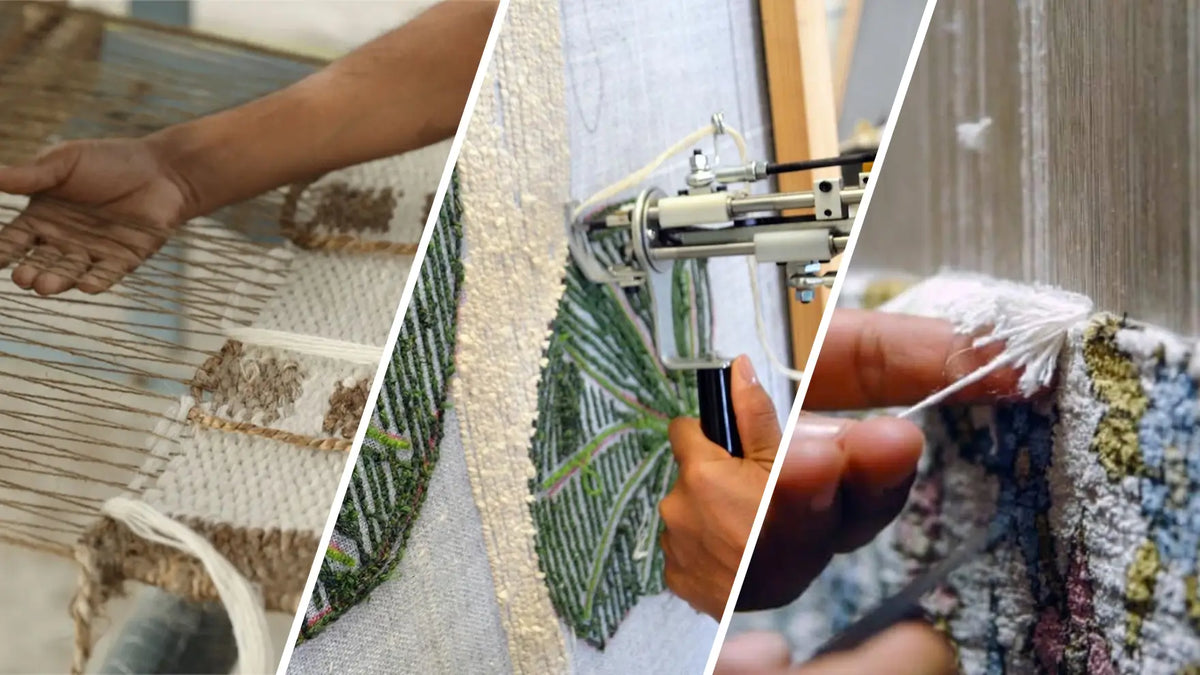
This type of rug is the all-time king of handmade rug construction. Artisans weave each knot on top of a foundation of warp and weft threads, row by row, knot by knot. One large piece (taking up a room) can take months, and sometimes more than a year, to complete.
The quality of a rug is determined by its knot count. The higher the knots per square inch, the finer the detail, the sharper the pattern, and the longer-lasting the rug until you can pay off your mortgage! When you turn it over, the design will be just as legible on the back, making it easy to tell that it's authentic.
Hand-Tufted Rugs
In hand tufted rugs making, a tufting gun is used. It is like a very fast and precise embroidery tool. Craftsmen put strands of yarn in a stretched fabric base, then glue a backing over the underside to lock everything in. It's quicker than knotting, so the price lands in a friendlier zone.
The outcome is luxurious, plush, and highly versatile. The downside is that hand tufted rugs rely on latex backing, so they typically won't last as long as a knotted rug. It's ideal for style-forward spaces, but they are less suitable for long-term heirloom plans.
Handwoven Rugs
Handwoven rugs are woven on a loom, with the weft thread alternating over and under the warp thread in a regular pattern. No knots, no tufts, only interlace to create the rug's body and surface at the same time.
These rugs have a balanced, solid feel since they're a part of the structure. There are many rug weaving techniques that belong to this category, and each creates a different texture, from smooth and tight to nubby and earthy.
Flatweave Rugs
The cool kids of the rug world are flatweaves. They have no pile whatsoever, so they are woven into the surface. For example, kilim and dhurries are well known.
If you enjoy flipping things when a stain appears, their thinness, lightness, and frequent reversibility are a plus. Flatweaves slide under doors easily, fold up for cleaning, and fit modern interiors like they were born there.
Handloom Rugs
Handloom rugs are woven on a manually operated loom, where the weaver controls both the shuttle and the tension. They fall somewhere between handmade and machine-made, providing a clean and uniform finish without losing the human touch.
They can be used in various materials, such as cotton weaves or chunky jute blends. Reliable, affordable, and easy on the eyes, they're the dependable friend of the rug family.
So, that's the cast, isn't it? Every technique has its own character, and none of them is "bad". Each technique is designed for different purposes, so it pays to know your rug construction methods before making a purchase.
Hand-Knotted vs. Hand-Tufted vs. Woven Rugs
It's time for the big show. Three bids, one quick explanation.
| Feature | Hand-Knotted | Hand-Tufted | Woven |
| Durability | Lasts generations | Last a decade | Sturdy and reliable |
| Feel | Dense and velvety | Plush and soft | Smooth to rustic |
| Design | Intricate, sharp patterns | Bold, highly customizable designs | Clean geometric patterns and stripes |
| Thickness | Medium and resilient | Thickest and cushiest | Slim, low profile |
| Maintenance | Regular, careful care | Gentle care to protect backing | Easiest to shake out and clean |
| Time to Make | Months of handwork | Quick turnaround | Moderate |
| Price | Premium | Budget-friendly | Affordable |
| Best For | Heirloom pieces | Trendy, cozy spaces | Busy, low-fuss homes |
Want a forever rug? Go knotted. Looking for a stylish and budget-friendly look? Go tufted. Looking for something versatile and easy? Go woven. Simple as that.
How Does Rug Construction Affect Quality?
Two rugs may look the same in a picture and entirely different in your living room. The difference lies in the construction of the rugs. Let's break down what it actually changes.
Durability
Durability is about the strength of the fibers' attachment. The "base" is made with knotted fibers, which will not easily move around after a few years of walking. Tufted fibers are simply glued together and backed and can loosen with age. The structure of woven rugs is what makes them strong; they do not deteriorate easily.
Texture
Texture is the fun part! Knotted rugs may be dense and velvety, tufted rugs can be cloud-soft and cushy, and woven rugs can vary between sleek and wonderfully rustic. Run your hand over a few, and you'll immediately notice the difference.
Appearance
Traditional patterns are invariably of this style and actually deliver razor-sharp detail. Tufting is excellent at bold designs, graphic designs and abstracts. Geometric patterns and tidy, clean stripes are common features of woven rugs, which appear deliberate and orderly.
Thickness
Thickness will impact comfort and functionality. The tufted rugs tend to offer the softest underfoot feel. The height of knotted rugs is medium and has excellent resilience. Flatweaves keep them thin and are perfect where space is important.
Maintenance
Build is a key component of easy upkeep. Flatweave rugs are the easiest type to remove fibres from. Tufted rugs will shed initially and should be handled carefully to avoid damaging the backing. Knotted rugs are durable but require careful and regular upkeep to remain beautiful.
When combined, these 5 factors will make you realize why construction is the silent master of rug quality. If you do it correctly, everything else will follow like a six-person relay race.
How to Choose the Right Rug Construction for Your Space
For the fun part, now match a rug with your real life. This is not about a catalogue life; it's about your real life, which includes muddy shoes and movie nights.
Consider Foot Traffic
Hallways, entryways, and living rooms get the brunt of the beating. In these areas, a hand-knotted rug or tightly woven rug is the best choice. Use the soft, fluffy stuff in quieter corners.
Think About Texture
Consider what you want the room to look like. Softness for barefoot comfort is achieved through tufted textures. A grounded and natural look suggests woven or jute. Knotted textures create a clean and sophisticated look.
Consider Your Interior Style
Knotted rugs add a touch of detailed artistry to both traditional and classic spaces. Flatweaves are a wonderful match for modern and minimalist rooms. Colorful, eclectic houses can get wild with tufts.
Consider Maintenance
If you need to clean, acknowledge that it will require your energy. A flatweave or handloom rug is a wonderful option if you desire a rug that is low maintenance. Knotted rugs have a long lifespan and require minimal maintenance while providing significant value.
Choose Based on Your Lifestyle
Children, animals, an office, ever-changing dinner party guests? The choice should be made because of lifestyle. A family with many children requires strength and forgiveness. A place where grown-ups go to relax is a spot for some more refined beauty.
Choosing the right rug isn't about finding the "best" construction overall. It's a much simpler question to answer: it's about finding the right one for your lifestyle.
Conclusion
Rugs are more than just decoration. They're little bits of craftsmanship, and once you know something about the way rugs are made, you'll be a hopeful shopper. Hand-knotted rugs offer durability for generations, hand-tufted rugs provide plush comfort at an affordable price, and woven rugs combine practicality with versatility.
Regardless of your direction, it is important to realize that the way rugs are manufactured will affect the way they look, feel and last in your home. Looking to meet your ideal partner? Visit Keva Living to discover the Keva Living collection and find a rug that makes a statement.
FAQs
- Which rug construction method is the most durable?
- Are hand-tufted rugs good quality?
- What's the difference between handwoven and flatweave rugs?
- How can I tell if a rug is hand-knotted?