Article: Natural Jute Area Rugs: Are They Good for Outdoors? What You Need to Know
Natural Jute Area Rugs: Are They Good for Outdoors? What You Need to Know
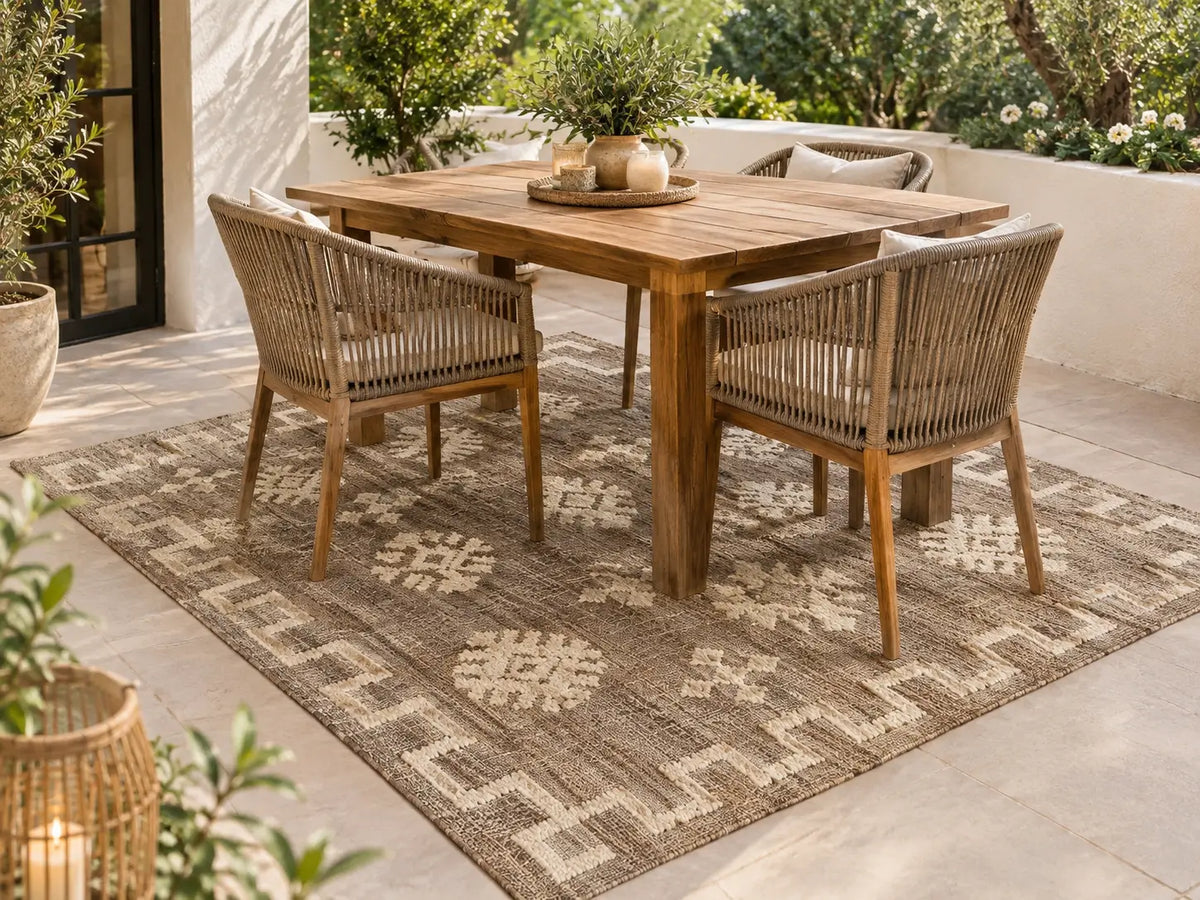
Imagine a sunny afternoon: you are sitting on your patio with a cup of coffee on the table, and beneath your feet lies a natural-fiber rug that feels warm and inviting. Jute rugs seem like a perfect fit for relaxed outdoor spaces, thanks to their earthy texture and effortless charm. But before you place one outdoors, there’s an important question to consider: can jute actually survive outdoors? If you've been thinking of using jute rugs outdoors for your deck or backyard decor, you may be questioning whether that gorgeous woven look can match up to the rain, sun and the occasional spilt lemonade. Let's explore jute rugs, its outdoor behaviour, and its ideal uses.
What Are Jute Area Rugs?
Jute is a natural plant fibre, primarily from the jute plant, and it has been used in textiles for centuries. It is soft for the feet, it is biodegradable, and it has that warm sun-kissed color that instantly makes a space feel more grounded and organic. Jute is a favorite among interior designers, as it matches a wide range of styles, from boho, coastal, minimalist, and farmhouse to any other. It's breathable, light, and durable, so many homeowners think it would be beneficial for outdoor use.
But the sad part is that jute's greatest indoor strength is also its greatest outdoor drawback: It's a natural, absorbent fibre, and nature isn't always a jute rug's best friend.
Are Jute Rugs Good for Outdoor Use?
The short answer is no; jute rugs are not suitable for fully exposed outdoor settings. On paper, jute rugs for outdoors use seems like a wonderful concept; it just isn't as durable as synthetic outdoor rugs. Moisture absorption is an important feature of jute fibers, and when they absorb moisture, they begin to rot from the inside out.
Not that it is too late for jute to be used outside. It just requires a thoughtful placement and application. A jute rug on an open lawn during monsoon is a different story than a rug set under a shaded patio roof. It is here; context is everything.
Why Natural Jute Rugs May Not Be Ideal for Outdoors
Let's explore why natural fiber outdoor rugs like jute struggle when they're placed in fully exposed outdoor spaces.
Jute and Moisture
Jute fibres are like tiny sponges. As soon as they become wet from precipitation, dew, or humidity, they will absorb water and retain it much longer than a synthetic material. This continual dampness over time creates a tendency for the fibers to fray, rot, or even lose their form completely. A once solid rug can become brittle and start to loosen up after just the first rainy season. But when durability is key, moisture is jute's most significant enemy, and it's one that jute doesn't win outdoors.
Exposure to Sunlight
Likewise, the sun may not seem to be doing any harm, but UV rays are persistent against natural fibers. When exposed to the sun for a long period, jute tends to fade, dry, and become coarse and brittle. The warm golden-brown hue you adore can become patchy and dull within months after exposure to direct sunlight. Jute is not coated in any way to protect it from the sun's rays like synthetic outdoor rugs.
Mold and Mildew
Add moisture and warm outdoor temperatures, and you have a breeding ground for mold and mildew. Jute rugs in damp shaded outdoor areas are especially vulnerable, as the fibers remain moist for longer without direct sunlight to dry them. After the mold has taken hold, it can be difficult to completely get rid of a woven natural fiber rug, and the rug is usually beyond saving. That's one of the main issues why natural fiber outdoor rugs, like jute, are not well known in fully outdoor environments.
Durability in Changing Weather
Weather is not always predictable, and that isn't pleasant for jute. One day it is scorching hot, the next pouring rain, but jute can't bend to either weather condition like synthetic fibers. The weave is compromised by the humidity changes over time, causing the rug to wear out quickly and to become thinner than a rug that is truly designed for outdoors use.
When you combine the four with each other, you'll realize that jute rugs for patio cannot be installed and left to their own fate.
Can You Use a Jute Rug on a Covered Patio or Balcony?
Yes, and this is the second time jute is getting the spotlight in the outdoors. But if you have a covered patio or balcony, it's a different story: The rain and strong, extended sunlight don't harm the rug. With a little protection, jute outdoor rugs can look and feel wonderful in these semi-protected areas, as they do indoors with their natural warmth and texture.
Proper ventilation and protection are essential for maintaining the rug's condition. If the rug is placed in a location with excellent air circulation and isn't constantly wet, it can withstand some humidity at times without breaking down quickly. Be ready to move it inside if it gets too stormy or humid, and turn it around from time to time to keep it from fading unevenly.
Outdoor-Safe Rug Materials
For those who want to decorate a completely open outdoor area (open decks, pool areas and open lawns), it is best to think of using materials that are made for outdoor, uncovered use. Polypropylene, polyester, and other synthetic weaves resist water, UV rays, and mildew, making them far more practical choices for true outdoor area rugs. These materials mimic the look of natural fibers surprisingly well these days, so you don't have to sacrifice style for durability. They are like the sturdier, more durable cousin of jute, offering the same attractive appearance but with greater toughness.
Best Places to Use Natural Jute Area Rugs
So let's discuss where jute rugs really excel: many areas outside the house that work beautifully with them.
Covered Patio
These jute rugs for outdoors use are best when protected from the rain and sun with a roofed patio. Combine with weatherproof furniture, and you have a warm and natural lounge area.
Screened Porch
Screened porches essentially offer a balance of all the best attributes: fresh air, shade, and rain protection in one place. One of the most secure semi-outdoor locations for experiencing the feel and warmth of jute.
Covered Balcony
Smaller covered balconies also serve much the same purpose as patios, protecting from the elements while maintaining a sense of openness. A jute rug in here would not pose much of a danger but would certainly lend to coziness.
Sunroom
Sunrooms combine the best of both worlds: natural light without the exposure to the weather. Jute rugs are particularly suitable for this use and provide a softening effect as well as a link to the indoor-outdoor theme of the design.
Indoor Living Spaces
Jute rugs are best suited for indoor use, but they can also be used outdoors. These rugs will last years in living rooms, bedrooms and dining rooms and can endure rain and humidity without a care.
Conclusion
Outdoor jute rugs are somewhat of a "handle with care" item. They're not ideal for a completely uncovered, exposed porch, but they are certainly an option for a covered porch, screened porch, sunroom and balcony where moisture and exposure to the elements are reduced. Synthetic outdoor area rugs are the safer, longer-lasting option for fully open outdoor spaces. For semi-shaded locations that want a bit of natural texture, natural fiber rugs for outdoors such as jute can still bring loads of charm, provided their environment respects their limits.