Is Your New Wool Rug Shedding? Here's What's Normal (and How to Stop It)
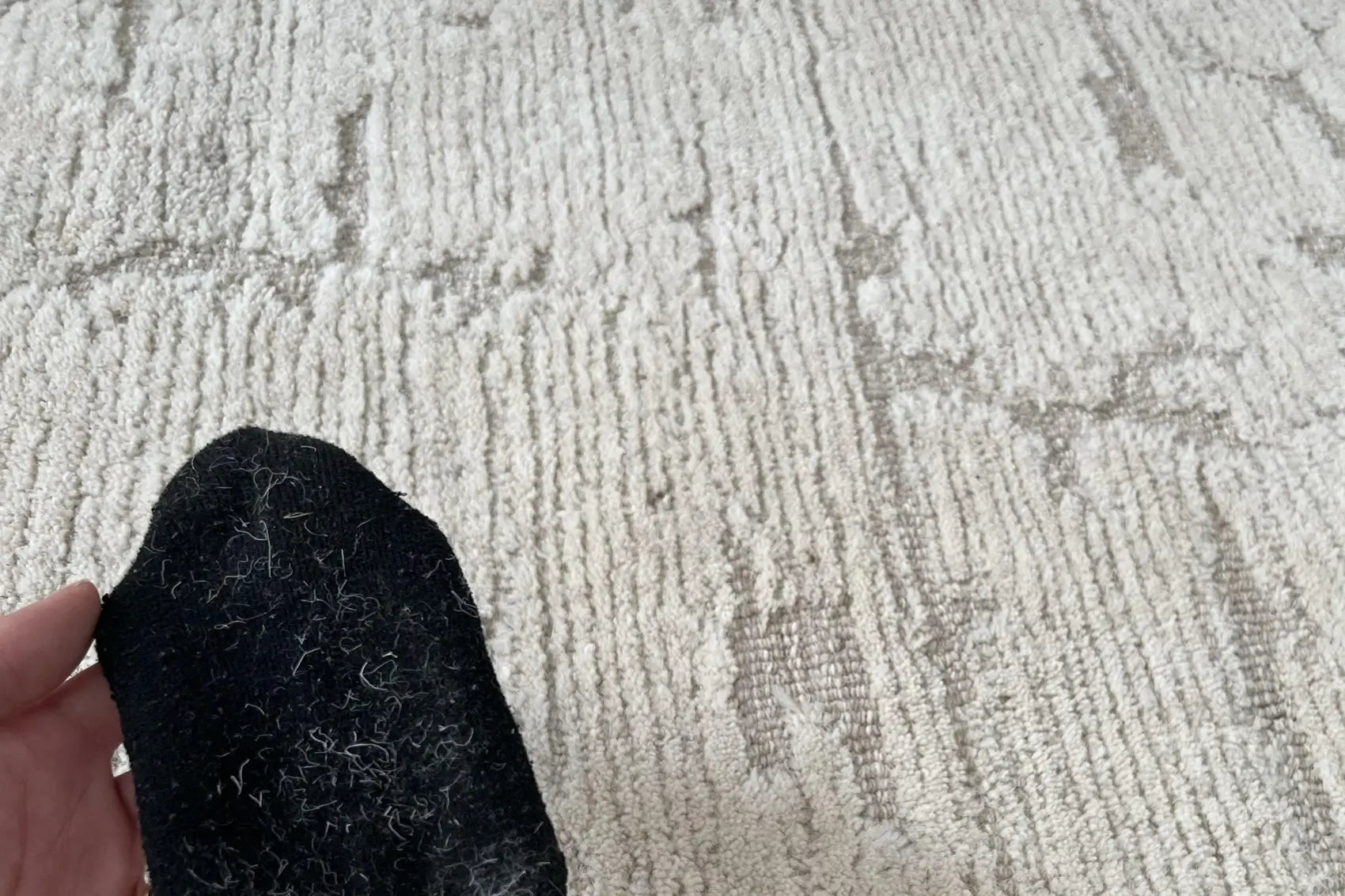
You've just unrolled that stunning new wool rug. It looks perfect until you notice tiny fibers clinging to it, drifting across the floor. Panic sets in. Is it defective? Did you make a mistake? Take a breath. Here's the truth: wool rug shedding isn't a sign of poor quality; it's actually the opposite. Those loose fibers are completely natural, a sign you've invested in a high-quality, natural fiber floor covering that's simply settling into its new home. In this guide, we'll cover why wool rugs shed fiber, what's normal, and, most importantly, how to prevent shedding so your rug stays beautiful for decades.
Why Do Wool Rugs Shed?
The moment you notice those first few fibers, your mind jumps to questions. Is it breaking? Did we receive a bad one? The answer lies in the very nature of wool itself.
Unlike synthetic fibers that are extruded in long, continuous strands, wool is a natural, staple fiber. This means individual wool fibers are short, typically just a few inches long. To create yarn, these short fibers are twisted together, spun, and then woven or tufted into your rug.
During the manufacturing process, particularly after the pile is cut to its final height, some loose ends aren't fully locked into the weave. When you walk on the rug or vacuum, these leftover fibers work their way to the surface and release. New wool rug shedding is essentially the rug "breaking in." It's shaking off the excess from its production phase.
Construction also plays a role. Hand-tufted rugs, for instance, often shed more initially because they use shorter wool fibers held in place by a latex backing. Over time, as these loose fibers are removed through regular cleaning and use, the shedding naturally stops. Understanding this process is the first step toward finding a rug shedding solution that works.
Is Wool Rug Shedding Normal?
So, you've answered why it happens. Now for the big question: is it normal? Yes, absolutely. Wool rug shedding is not a defect, nor does it indicate poor construction. It is a natural characteristic of a high-quality, natural fiber rug.
Shedding is actually a sign of longevity. Quality wool fibers are resilient; they can bend thousands of times before breaking, which is why a well-made wool rug can last for decades. The initial shedding phase you're experiencing is just part of the settling process as your rug adapts to foot traffic and its new environment. Once the excess fibers are gone, the rug will stabilize and look beautiful for years to come.
How to Stop Wool Rug Shedding
While you can't completely stop the natural shedding process, you can manage and reduce it significantly. Here are five effective strategies to prevent rug shedding:
Vacuum Correctly
Never use a rotating brush; it pulls fibers out. Use suction-only, adjust height to skim the surface, suction only; the pile direction.
Rotate the Rug Regularly
Rotate every six months to distribute foot traffic evenly and prevent excessive wear in high-traffic spots.
Trim Loose Fibers Instead of Pulling Them
Never pull stray fibers, trim them flush with scissors to avoid unravelling the weave.
Use a Rug Pad
A quality pad absorbs footstep impact, reduces friction, and prevents fibers from snapping.
Keep the Rug Dry
Blot spills immediately (never rub) and avoid over-wetting during cleaning to prevent fiber weakening.
Following these habits reduces shedding and protects your investment for years.
How Long Does Wool Rug Shedding Last?
Patience is key. The heavy shedding you notice in the beginning is temporary. Most shedding occurs within the first 1 to 3 months, with a gradual reduction over time. After about 6 months, you should see a significant decrease in loose fibers. While light shedding may continue throughout the rug's lifetime, a natural trait of wool, the heavy "break-in" period should be over. If shedding continues excessively beyond a year, it might be worth consulting the retailer.
Mistakes That Make Wool Rug Shedding Worse
Sometimes, well-intentioned care can actually backfire. Avoid these common mistakes to ensure you're not accidentally exacerbating the problem.
Using rotating brush vacuums
As mentioned, over-vacuuming is the number one culprit. The rotating bristles will aggressively pull at the wool fibers, leading to excessive, unnatural shedding.
Over-vacuuming
While regular vacuuming is essential, overdoing it, especially with the wrong technique, can be detrimental. Vacuuming too frequently or with the wrong settings can stress the fibers. Stick to a regular but gentle schedule.
Pulling loose fibers
This method is one of the finest ways to cause permanent damage. Pulling a fiber can unravel the knot or tuft, creating a bald spot that won't heal.
Using harsh chemicals
Chemical cleaners are far too aggressive for natural wool. They can strip the fibers of their natural oils, making them brittle and prone to breaking, which leads to more shedding . Always use pH-neutral, wool-safe cleaners.
Excessive moisture
Wetting a wool rug can cause the fibers to swell and weaken. When they dry, they can become brittle and shed more easily. If your rug becomes wet, dry it as quickly as possible in a flat position to prevent warping.
Steam cleaning too early
Steam cleaning can expose a new rug to excessive heat and moisture. It's best to wait until the initial shedding period has passed before considering a deep clean like this.
By steering clear of these common errors, you'll protect the structural integrity of your rug and ensure that its shedding is kept to a natural minimum. Here is how to clean your wool rug at home.
Conclusion
Shedding from a new wool rug can be concerning if you're unprepared; however, with the right knowledge, it becomes a simple and manageable aspect of the ownership experience. Remember, this "break-in" period is a sign of natural, high-quality materials that will serve you beautifully for decades to come. The key is to be proactive: vacuum gently and correctly; trim, never pull loose fibers, use a quality rug pad; and avoid common care mistakes. By taking these simple steps, you can effectively prevent rug shedding and help your rug settle in gracefully.
FAQs
- How long will a new wool rug shed?
- Can I vacuum a shedding wool rug?
- Is wool rug shedding harmful?
- Should I cut loose fibers from my wool rug?
- How often should I vacuum my wool rug?
- Can rug pads reduce wool rug shedding?