Indian Handmade Rugs: Craftsmanship, Types, and Why They Are Loved Worldwide
Some products are bought, and some are selected with a story in mind, and Indian handmade rugs fall right into this category. Weavers across India were already creating beautiful pieces of wool, cotton, or silk, long before “handmade” became a design term, and they were using real skill in every knot. This legacy remains alive today, which is why handmade rugs from India are still featured in interior magazines, designer portfolios, and homes far beyond the borders of India. What sets them apart from others is not only their appearance but also the manufacturing process, the patience, the skilled hands, and the techniques that have been developed over generations.
In this blog we will get a closer look at the evolution of Indian rug-making, the different types of rugs, the design styles that create contemporary interiors, the materials that artisans use to craft these rugs, and why these rugs have won such a devoted global audience.
History of Indian Rug Making
The history of Indian rug weaving dates back many centuries and can be traced to the Mughal era, when the technique of weaving rugs from Persia came to India and merged with local craftsmanship to form a beautifully blended rug. Over time, cities such as Bhadohi, Panipat, Jaipur, and Agra emerged as prosperous hubs for carpet and rug weaving, with a unique style, color scheme, and knitting method for each. It started as a royal craft, used in palaces and the houses of the nobility, and gradually developed into a widespread cottage industry, with thousands of skilled families across the country.
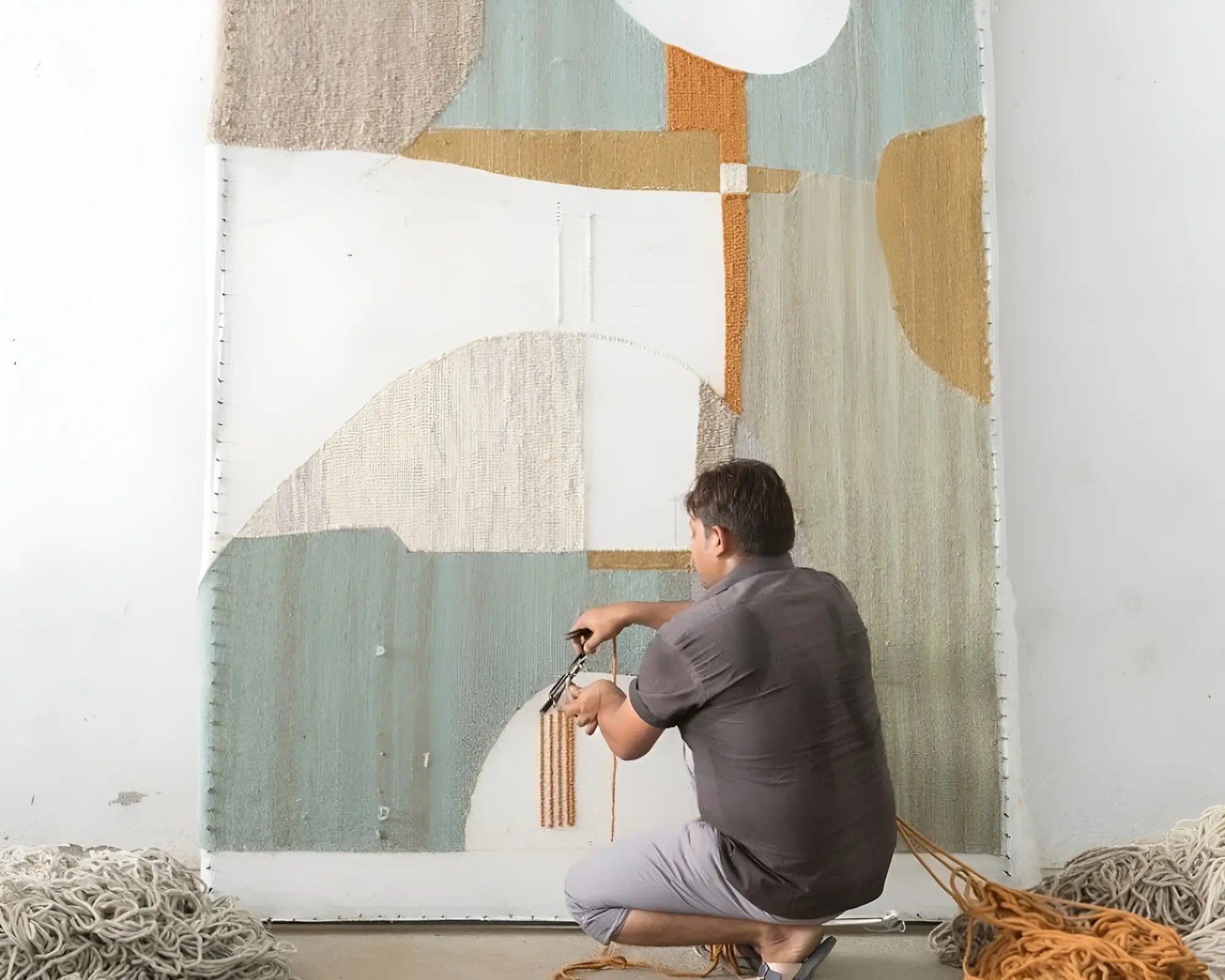
It is a deep, generational craft, passed from parent to child and from weaver to apprentice, and an unbroken chain of knowledge that gives Indian handmade rugs their unmatched character. Today, in the era of automation, most Indian rug clusters still use traditional looming methods and hand tools to create rugs, retaining methods that are centuries old. The significance of the living history is what makes handmade rugs from India different from the mass-produced ones.
Types of Handmade Rugs from India

There are many different techniques that are used in rug making in India, and it's important to understand the variations to choose the rug that is right for you and your space.
Hand Knotted Rugs
Hand knotted rugs are the most difficult and time-consuming of all the handmade rugs in India. Hand tying around the warp threads, a process which may be weeks or months long depending on the pattern's complexity, is done for each knot. As a result, hand knotted rugs in India become more aged and characterized with time, making them a popular family heirloom.
It's this kind of commitment that has made hand knotting the standard of true craftsmanship in India for centuries.
Hand Tufted Rugs
Hand tufting, on the other hand, involves using a tufting gun to punch yarn into a fabric to create the effect and then setting it with latex and then backing it with canvas. While you still get to create beautiful patterns with lots of detail, hand tufted rugs are quicker to make than hand knotted ones; this is why they are the perfect choice for those homes that want to look high-end without the wait.
This combination of versatility and ease of use is what continues to make hand tufted rugs one of the most appealing rugs today.
Handwoven Rugs
The handwoven rugs avoid knots and tufting and are made with handwoven weaving of the weft and warp threads into lighter, flatter constructions. This simplicity allows the artisan to experiment with color, stripes, and texture and create a rug that feels good underfoot and that is definitely handmade.
The versatility and ease of use of this character is what makes handwoven rugs so appealing across interior styles.
Handloom Rugs
Handloom rugs are made by hand using looms and are usually made with natural fibers, such as cotton, jute, or wool, which allow for a breathable and natural feel. There is no electricity and very limited machinery involved; it is a sustainable, old-school Indian weaving way of work. The outcome is a casual and natural style that is easy to integrate into casual and coastal-style homes.
This is why handloom weaving holds such significance in the identity of India's rug-making industry, one that is eco-friendly and artisan-centric.
Popular Indian Rug Designs and Styles
In addition to technique, Indian craftsmen are known for an incredible range of designs, and the style you select can completely transform the appearance of your space.

Traditional Pattern
The traditional patterns are inspired by old motifs like Mughal floral patterns, paisleys, and medallions, which may be presented in rich jewel tones. These designs add a timeless feel and work beautifully in any interior, from traditional to eclectic.

Modern Design
Modern design rugs favors clean lines, contemporary color palettes, and a more minimalist look, which complement the interior design trends of the day. They're perfect for homeowners who want a rug that looks fresh but not defined by any particular time frame.

Geometric Style
Geometric rugs are characterized by their repetition of shapes, angles, and symmetrical patterns, which makes them a strong, graphic statement underfoot. This is a particularly favored look for urban homes with a more contemporary and structured design.
Minimal Pattern
Minimal patterns are those that use delicate textures, subtle color variations, and simple patterns or details, rather than bold colors or intricate designs. These rugs are ideal for areas where the rug should blend in with the room and not stand out.
Abstract Design
The abstract rugs are free-flowing in design, often inspired by brushstrokes, watercolors, or other artistic forms, adding an artistic and gallery-like atmosphere to the room. They are great for using as a focal point in a neutral room.
Floral Design
Delicate floral rugs can add softness and warmth to any room with delicate patterns, from intricate vintage-inspired flowers to simplified, modern florals. It's a traditional design choice for bedrooms and living rooms.
These design inspirations demonstrate the great variety of Indian handmade rugs available, catering to all, from heritage enthusiasts to minimalists.
Materials Used in Indian Handmade Rugs
The material used to make a rug has as much influence on its texture, durability and feel as does the weaving technique.
- Wool: This is the most common material used for indian handmade rugs because of its natural qualities of durability, flexibility and keeping colour over many years.
- New Zealand Wool: Many high-quality rug manufacturers prefer New Zealand wool because of its long fibre length and good strength, meaning that it can be detailed more finely and is a thicker pile.
- Cotton: Made alone or mixed with wool, it is less expensive and less luxurious, but is suitable for casual wear.
- Silk: Used on special garments, to lend a sheen and a smoothness; sometimes used with wool to add dimension and contrast to pattern.
- Jute: has a rustic, earthy feel and is a popular choice for a natural, sustainable fabric with a relaxed look.
- Viscose: It is soft, super shiny and affordable and is widely used in contemporary, sophisticated interior design.
These each offer unique properties, and the best fibre for you will depend on the appearance, texture and longevity you are looking for in your rug.
Why Handmade Rugs from India Are So Popular
When it comes to rugs, there are several clear reasons why Indian rugs are famous, and understanding these reasons starts with craftsmanship. Unlike mass-produced rugs, each rug is created by real human hands, meaning no two rugs will be the same. This the main diffrence between handmade rugs and machine made rugs.
Indian artisans also offer a very rich vocabulary of design, ranging from traditional to modern, and the natural fibers they use, particularly wool, are exceptionally durable and can last for over ten years with proper care. Cost also matters: Many of India's rug makers rely on skilled but easily accessible artisan labor, meaning that buyers can truly expect to enjoy premium craftsmanship at a price tag they can afford.
Now add to this a growing interest in sustainable, handcrafted products, and you see why Indian rugs are famous worldwide in markets ranging from Europe through the Middle East and America.
Final Thought
Handmade rugs from India offer a combination of heritage, artistry, and practicality that is difficult to find in modern living rooms, from their centuries-old weaving traditions to their presence in modern living spaces. Whether you're captivated by the detailed, patient work of hand knotted rugs India, the creative possibilities of hand tufted rugs, or the rustic appeal of handloom, there's a rug that resonates with your space and your thoughts.
Keva Living's philosophy is exactly the same, and their rugs are made using time-honored techniques and designed for modern homes. Choosing a handmade rug is more than just a decor piece; it's an investment in artistry that will remain a source of warmth and character for years to come.
FAQs
- Why are handmade rugs from India famous?
- Are Indian handmade rugs good quality?
- What materials are used in Indian rugs?
- How long do handmade rugs last?
- Are handmade rugs worth the investment?