Expert Tips for Mixing and Matching Rug Styles Like a Pro
Written by Subahu Jain
Ever been in a room where every single piece is the same, all the colors are compatible with each other, and you felt like nothing in particular? That's the price of being overly cautious. The rooms are drawn to have layers: a touch of contrast, an element of surprise, and a rug that doesn't match the other rug but somehow works. It's all about mixing and matching rugs styles, such as tone-on-tone fabrics or contrasting designs on tone fabrics. If done properly, it is possible to make a home look neat over the years rather than neatly collected from one catalog page.
The upside is that, at a quick look at the chaos, there are actual rules! They're easy to pick up! We'll go through the reasoning behind why it works, the 7 expert moves to try, and room-by-room ideas you can steal right now. From bold geometric designs to quiet, serene tufts, the team at Keva Living is here to assist you in styling with confidence.
Why Mix and Match Different Rug Styles?
One rug will help define a room. With the careful selection of two or three rugs, it can be transformed. The advantage is you are not bound to use only similar styles; instead, you can incorporate different colors, styles and shapes that complement each other while clearly defining areas.
Create Visual Interest
If you use only one pattern, one texture, and one palette for a room, it looks limp and lifeless. Various types of rugs will help the eye wander. For a space to feel designed, there's a certain amount of contrast that's needed, whether it's a flat-weave next to a plush pile or a traditional motif next to a clean modern stripe. The same applies to outstanding outfits that include a crisp shirt and chunky knit.
Define Different Zones
Open floor plans are beautiful but can be more like a big, undefined box. Rugs serve as “soft” edges. One rug marks the lounge, another sets the reading nook, and a third tells everyone where the dining table lives. One of the smartest rug layering ideas starts with this simple job: giving each corner of a big room its own purpose.
Add Warmth and Personality
A plain or grey floor can feel a bit cold, to be honest. Multiple rugs add softness underfoot, insulation in winter, and plenty of character. These too tell a story. A vintage-inspired look meets a modern neutral is an expression of you, and that is the whole point of a home.
When you opt for mixing and matching rugs instead of one safe style, you're not simply decorating, but you're also designing. You are adding some dimension, shape, and a touch of character to every square foot!
7 Expert Tips for Mixing and Matching Rug Styles

Here's the fun part. These rug styling tips ensure the look is intentional rather than accidental, and they work in any room with any budget.
1. Find a Common Color
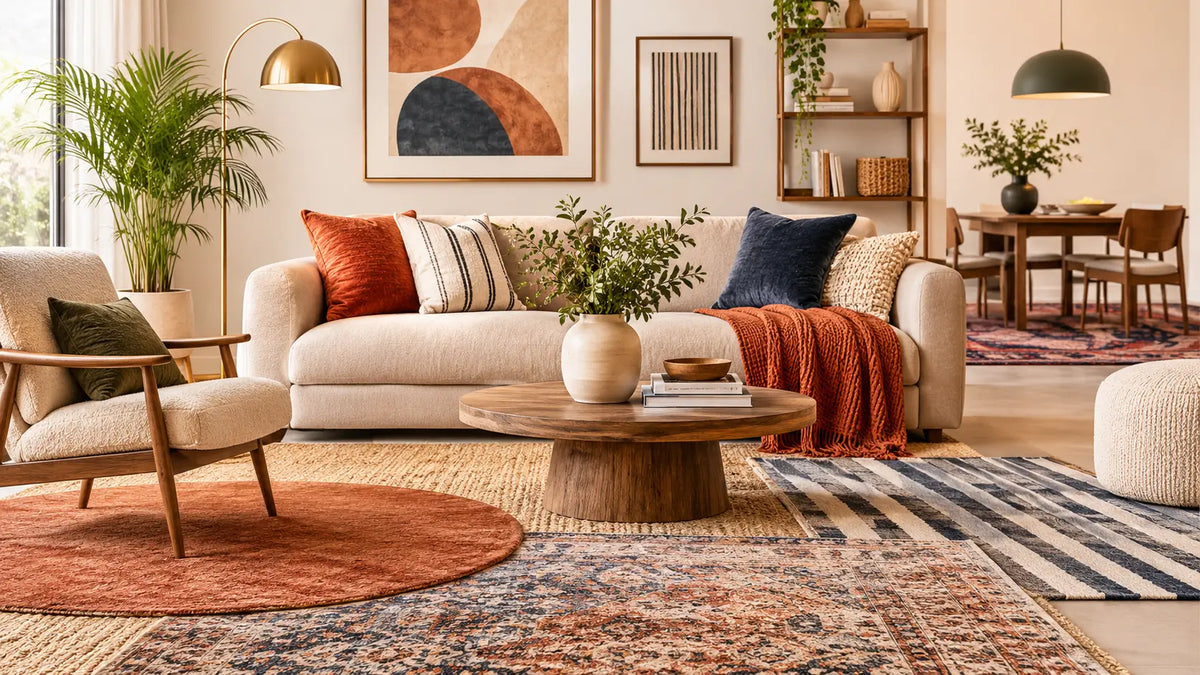
This is the first golden rule. You don't need to match the colors of your rugs, but you should converse with them. Choose a neutral color (a soft terracotta or a rich indigo), and use it to coordinate each rug, even as a small accent. The single thread looks excellent and ties the whole look together.
2. Balance Bold and Subtle Patterns
Mixing rugs, such as a tone-on-tone fabric or a pattern, is like having a conversation: One person should be talking, the other listening. If a rug has a strong color and print, include a subdued rug such as a tone-on-tone fabric or solid color. Two bold patterns contesting for attention will exhaust the room.
3. Combine Different Textures
Texture is the magic ingredient of designers. Match a low-pile, flat-woven rug with a thick wool pile, or a soft, tufted rug with a jute underlayment. The contrast is rich and tactile, and it is even effective if the colors are almost the same.
4. Vary Pattern Scale
Another rug pattern tip is to alter the size of the patterns. A large-scale floral pairs beautifully with a small-scale geometric. If the patterns are of similar size, then they become noise. When they differ, each one gets its moment.
5. Experiment With Shapes
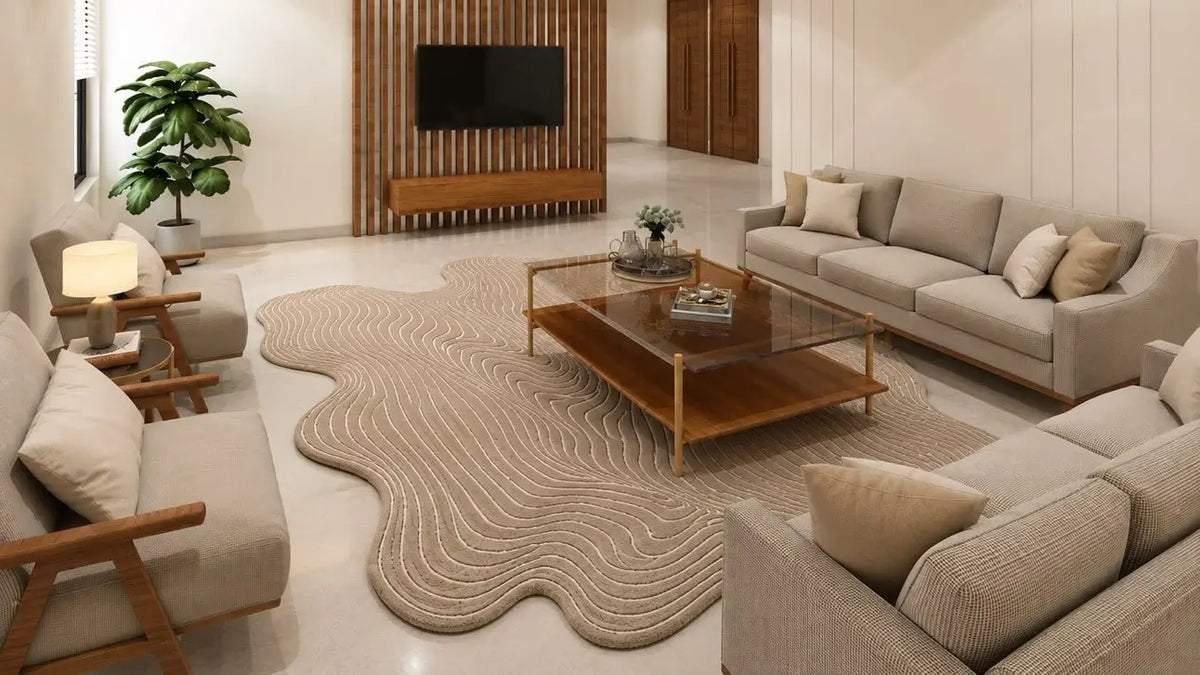
While rectangles are a suitable choice, they are not the only option. A round rug covering a rectangular rug, or an organic freeform rug next to an organic runner, breaks the straight lines and adds movement. Curves are used to alleviate a room where all the furniture has sharp edges.
6. Consider Room Proportions
Size matters here. If you have limited space, keep your palette limited and your rugs smaller; it will be easier to avoid a cluttered floor. In a spacious area, you can opt for larger and more striking designs. The best rule to follow is to leave a few inches of bare floor showing between rugs, unless you're putting them on top of each other.
7. Maintain a Consistent Design Theme
Even the most eclectic rooms need a quiet backbone. Select one theme (modern, bohemian, or classic) and have each rug express it. You can mix eras and origins, but the overall mood should still feel like one home.
With these seven strategies, mixing and matching rug styles is no longer a risk. It quickly becomes instinctive.
Rug Layering Ideas for Different Rooms
It's always nice to hear about theory, but often you want to see where every idea goes. Here are some tips for layering rugs, organized by room, so you can start with the space that needs the most attention.
Living Room: Layer Rugs to Define the Seating Area
Place a large neutral base rug under the front legs of the sofa and chairs. Place a smaller, more characterful rug over that, like a patterned rug or another texture, right where the coffee table is. The result is a pleasant, well-defined conversation space that still feels connected with the rest of the room.
Bedroom: Combine a Larger Base Rug With a Smaller Accent Rug
Have a generous base rug under the bed, at least 2 ft wide on each side, to ensure that you rest your feet on something soft in the morning. Next, place a smaller throw rug, a round rug, or a soft shag rug next to the bed or at the foot of the bed. It's a small detail that makes the space feel like a boutique hotel suite.
Dining Room: Prioritize Adequate Space for Chairs and Easy Movement
Here, practicality leads. Make the rug 24" longer on all sides so chairs can stay on it when pulled out. Chairs will slide around more on a flat or low pile, so go with that and minimal layering. Beauty is wonderful, but nobody wants to pull a chair leg out of a shaggy rug mid-dinner.
Entryway: Use a Runner and a Complementary Accent Rug
The entryway is the first impression of your house. A sturdy runner will endure the foot traffic, while a smaller complementary rug at the door, in a slightly different color and pattern, will give a warm welcome. Pick low-pile pieces so the door can swing freely. To pick the perfect rug follow our entryway rug guide.
No matter which room you start in, these rug layering ideas are all based on this principle: each rug should have a purpose; each purpose should be easy.
Conclusion
The best rooms are not always the most perfect. They're the most considered. By finding a similar color, repeating patterns, experimenting with texture and size, and following the proportions of your space, you can get a sense of mixing and matching rug styles without making any mistakes along the way. Do less, believe your own eyes, and let your floors speak for themselves.
Are you looking to add layers to your outfit? Shop the handmade rug collection on Keva Living and choose the rugs that will make your home feel like yours.
FAQs
- Can you mix different rug styles in the same room?
- How many patterns are too many when mixing rug patterns?
- What are the best tips for layering rugs on a budget?
- Do layered rugs need to be the same size?